• 10Sep

    Bob and I went to Scotland this summer.  We wanted to see the town that his grandfather and great grandfather emigrated from.  The town is Kilwinning.  It is home to Kilwinning Abbey and the first Masonic Lodge, known as The Mother Lodge.

    It was founded in 1140!  Bob’s ancestors were members here.

    We knocked on the door and stated our reason for being there and were given a very warm welcome and a tour of the lodge.

    But most exciting was that they were having a parade the day we were there!

    It was called an Orange Walk or Orange March.

    I had never heard of the Orange Order, but it’s a fraternal organization.

    There were lodges represented from all over Scotland and Ireland.

    Their name comes from Prince William of Orange.

    Each lodge carried a big banner.

    It was so interesting to see the way the different groups were dressed.

    Some just marched, some had drums and some had fifes.

    And a few had drum majors like this guy, who was very good!

    I think there were about 75 units in the parade.

    It lasted over an hour.

    There were a few women’s groups, and I loved their hats!

    The most dominant feature of the town is the ruins of the Abbey.

    You see it from everywhere.

    After the parade, we wandered over to the Abbey.

    We were delighted to find that the tower was open and you could go up with a guide.  While we were stopped on the bell level, the bells chimed!  I just about jumped out of my skin!

    The view was fantastic!

    On the way down, I told the guide that Bob’s great-grandfather had been provost of Kilwinning (that’s like the mayor).  She said, “You know that we have the robe he would have worn when he presided at meetings.”  Well, we didn’t know, but what a thrill to see it and imagine all the times Bob’s great-grandfather donned it.

    She told us there was even a street named for him…

    …so we had to check it out, of course!


    Tags:
  • 24Aug

    I’m obsessed with Swedish doors!

    They’re all different….

    …but somewhat the same.

    They seem to be made of planks.  Some are horizontal like the first four, but they’re not the most common.

    These chevron designs seem to be quite common.

    I love the nail head detail on this one.

    This is a very old door.

    Here’s a combo of chevrons and horizontal planks.

    A variation on the chevron theme is the diamond design.

    This is probably the most common.

    Blue is a popular color,

    as is gray.

    Often a natural stone is used as a step.

    Great detail around this double door.

    An interesting combination.

    I love the little diamond windows.

    Another very old door.

    I love the stairs in front of this one.

    Another fancy surround.

    I thought the arched top of this door was interesting.

    The following are all at least a century old.

    I think these very old ones may actually be carved.

    Amazing paint.

    What a cheerful way to be greeted when visiting someone!


    When we built a Swedish cabin in our woods, it had to have a Swedish door, too!


    Tags:
  • 15Aug

    Sometimes beauty is in the details.  That’s the case with Swedish windows.

    There are so many designs of leaded windows.

    Some of these are centuries old.

    I know leading served a purpose…

    …but making it decorative didn’t make it any stronger.

    It just made it more beautiful.

    These windows are not just lovely to look through…

    They’re lovely to look at!

    Even shutters can make a statement.

    The heart finds its way into lots of Swedish folk art.

    This shutter is in Nås, Anna Lena’s hometown.

    Some windows have decorative trim.

    This is a very popular design.

    Here’s a fancy one.

    I saw this one on a resort island.

    Round, anyone?

    The designs here are painted on the building and not really part of the window.  How ingenious!

    Look carefully at the upper story of this house.  With the exception of the tall window in the gable end, all the windows on the second floor (not just the trim) are painted on!  At one time, you were assessed taxes based on how many windows you had in your house.  Perhaps that’s why these aren’t real windows.

    Of course flowers enhance any window.

    This is the design the windows in my dream sunporch will have!

    I liked the greenery both inside and outside this window.

    Hope you enjoyed this peek at Swedish windows!


    Tags:
  • 14Aug

    The food in Sweden is wonderful–and so beautifully presented.

    This was our breakfast buffet one morning…

    …on the island of Öland.

    This was called “Summer Farm Hard Bread.”

    Even the fast food/take-out is amazing.

    We enjoyed some fine meals, like this tuna…

    …this pasta…

    …and these were the best French fries I ever tasted–crispy on the outside and creamy on the inside.

    Picture yourself at an amusement park and going into a fast food restaurant for a bite to eat.  You go up to the counter and order, someone slaps some food on your plate and you find a place in the crowded restaurant to sit down.  Do you expect it to look like the photo below?  Well, that’s what it was.  And I have to say, the meatballs were some of the best I’ve ever had!

    This was the coffee service in the same restaurant.  Help yourself!

    Berit served dessert outside while we were at her house.

    We discovered rhubarb crisp with vanilla sauce was quite popular.

    On, and in Visby we discovered a crepe shop!  It doesn’t get much better than crepes served with ice cream AND whipped cream!

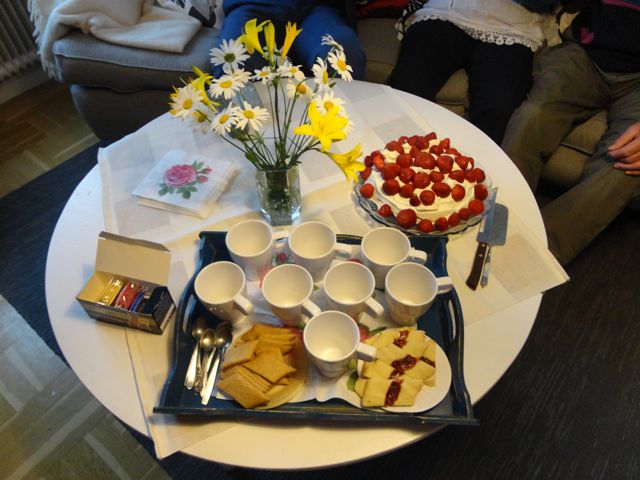
    It isn’t midsummer without a strawberry whipped cream torte!

    In Sweden, waffles are dessert.

    I showed you in an earlier post the pastries offered at McDonald’s!

    Well the next THREE photos are in a 7-Eleven!


    One of my favorite signs is “Konditori,” which means bakery.

    The selections are always incredible.

    Besides sweet rolls, the breads are wonderful.

    Sweden has the best strawberries, and when they’re in season, they are everywhere, like on these tarts at the bakery in the NK Department Store.

    When you graduate from high school in Sweden, you wear a cap like the one shown below.


    So it was no surprise when we saw cakes baked to look like the graduation caps!

    I thought they were so fun.

    Of course, I’m very fond of the traditional Princess Cake–the green ones are the most traditional.

    And you see a lot of them in bakeries around Sweden.

    But now there’s a new cake–the Princess Estelle cake…

    …named for Sweden’s newest royal, baby Estelle.


    Tags:
  • 25Jul

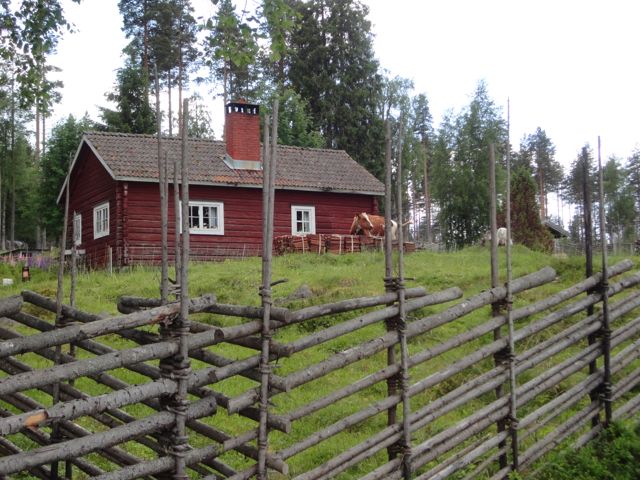
    Dalarna is the province of my ancestors.  Whenever you read about Sweden, Dalarna is referred to as “the heart of Sweden.”  It’s the place where the folk traditions live on, where people still wear their parish costumes at midsummer, where the Dala horses are made, where the quintessential red paint comes from.  To me, Dalarna feels like home.

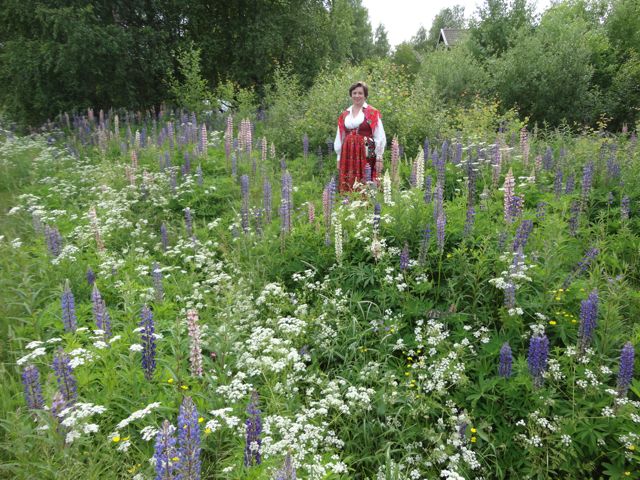
    The lupine grows in abundance.

    The chimneys are artfully designed.

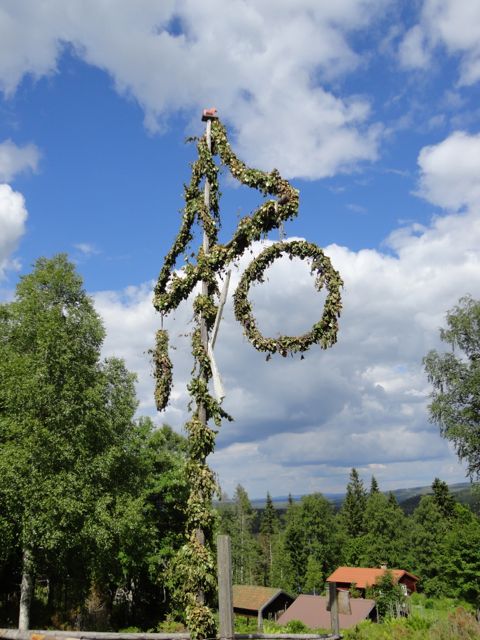
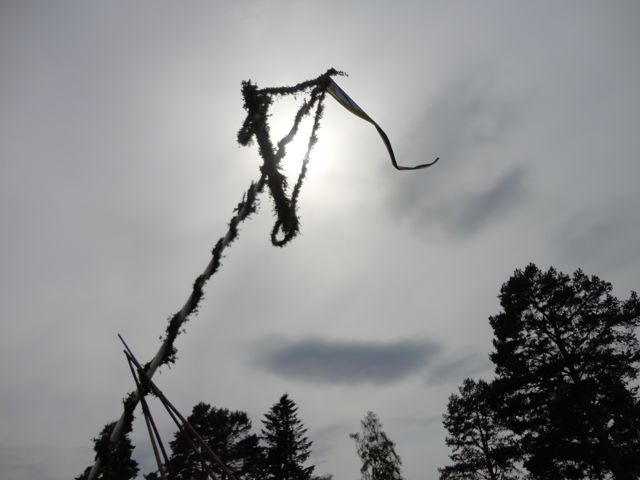
    Every village has a maypole.

    Each with its own special symbols.


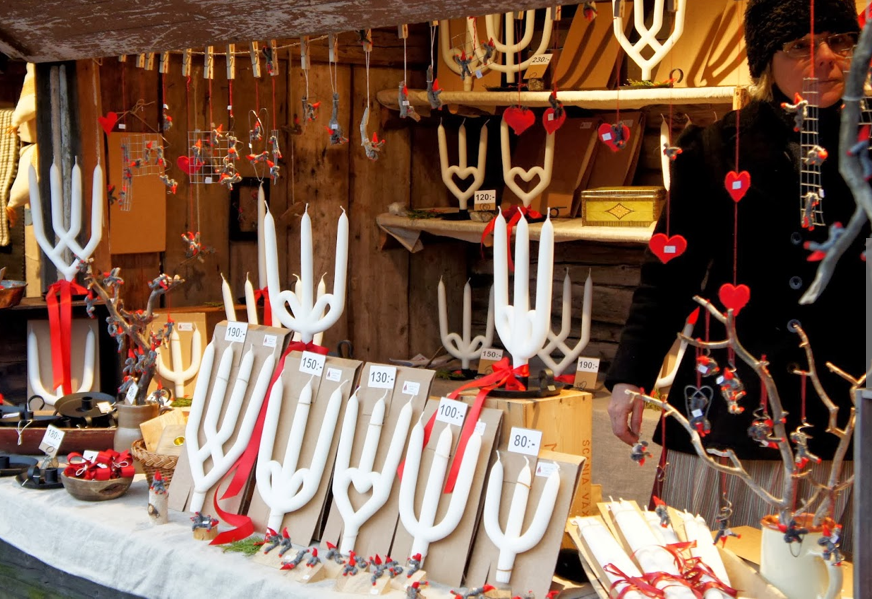
    There’s room for a giant tupp candlestick in the middle of a roundabout!

    It’s where Mora clocks originated.

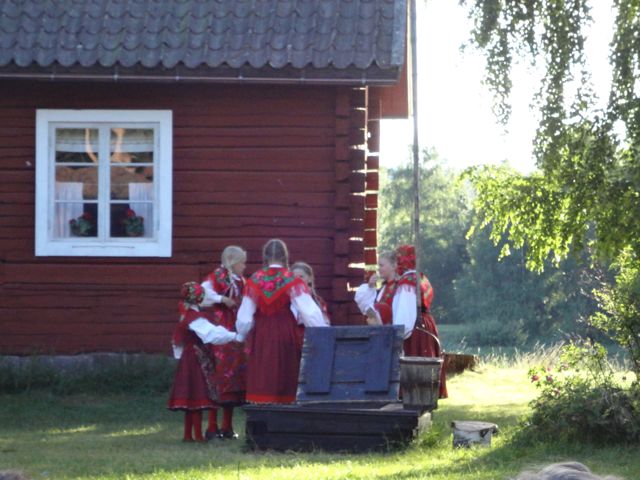
    The parish costumers are colorful.

    Red buildings abound.

    The forests are abundant.

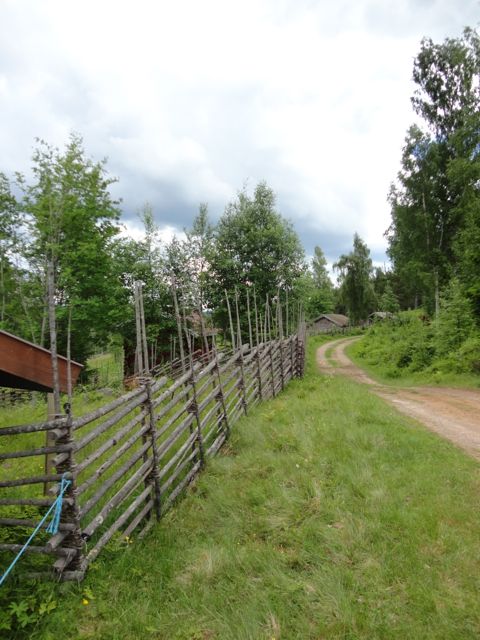
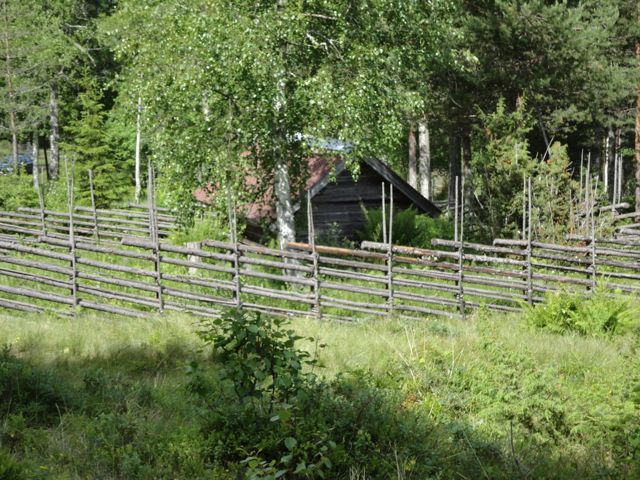
    The fences are special.

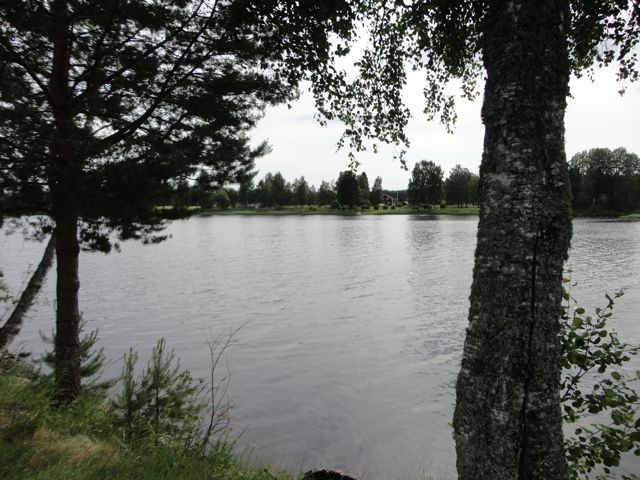
    Charming little lakes are everywhere.

    The sunsets are amazing.

    And the strawberry whipped cream cakes are pretty darned good!

    I’m ready to go back now.


    Tags:
  • 24Jul

    Last year, I was delighted to discover a book about traditional Swedish parish clothes called Scandinavian Folklore.  While reading through it, I discovered a series of photographs that were taken in the village a Boda, at their Gammelgård—which literally translated means “old farm.”

    It wasn’t far from Nås, so on Sunday, Bob and I went for a drive to Boda to see the old farm.

    The midsummer decorations were still up, like the birch branches…

    …and, of course, the maypole!

    Did you know every village decorates their maypole differently?

    There was no one around, and they skies were threatening….

    …but we took our time and looked around.

    I even climbed up to an outside balcony.

    As always, I love the old windows…


    …and doors.

    This door had a great old handle with some decorative carving and the date–1755.  Also notice the decorative plate behind the keyhole.

    At one point, the sky opened up and we had to take refuge on a porch.

    Luckily, the shower didn’t last long and we were able to walk around the perimeter of the property…

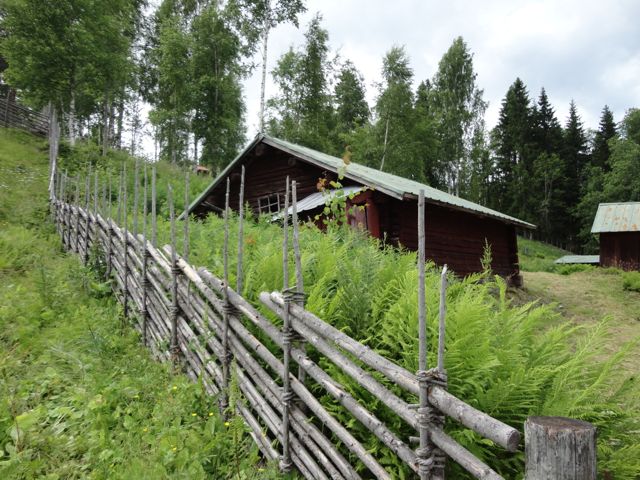
    …and enjoy the typical Dalarna fences…


    …and wildflowers.

    Good-bye, Boda.  Thanks for letting us visit.

    Tags:
  • 20Jul

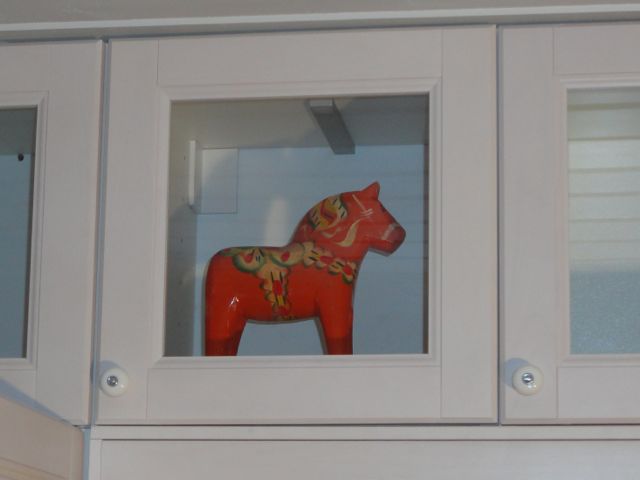
    You can’t visit the province of Dalarna—the heart of Sweden—without some exposure to Dala horses!

    While at Sven-Eric’s I took photos of the Dala horses that he’s had since he was a child. I like the old ones for several reasons.  I love looking at the different styles of decorative painting, for one.

    I don’t mind the worn paint at all.  In fact, it makes me happy to think of the hours someone spent playing with this horse.  I also love his round tummy!

    This little fellow must have had a cart at one time, like the horse in the book Karl’s Wooden Horse.

    There was even a pig!

    It’s not hard to find Dala horses to buy when you’re in Sweden.

    Shops are full of them.

    They’re lined up like little armies!

    Already have a horse or two?  How about a chicken?

    Or a Dala horse on skis?


    Even though I’ve been many times, it’s always fun to go to the factories.  The horses are still hand carved.

    Oh, my, that’s a lot of horses waiting for paint!

    Seeing them like this makes me think of story lines for a Dala horse thriller.  ”Let me out!”

    Oh dear.  The carnage!  Oh wait, that’s just paint.

    Ah, this is better.  All dipped and ready for decoration.

    I love how rapt the expressions are on these kids’ faces.

    More horses waiting for a new home.

    We bought a special one for our youngest granddaughter, Peyton.  This color is a limited edition.

    My collection is already, shall we say, “extensive?”  So I just bought a couple of novelty things, like this jigsaw puzzle horse.

    And this paper one, that was a card that I punched out.

    I couldn’t resist these two that I found in an antique shop.

    I hope they’ll be happy joining the “herd” I already have!

    Tags:
  • 19Jul

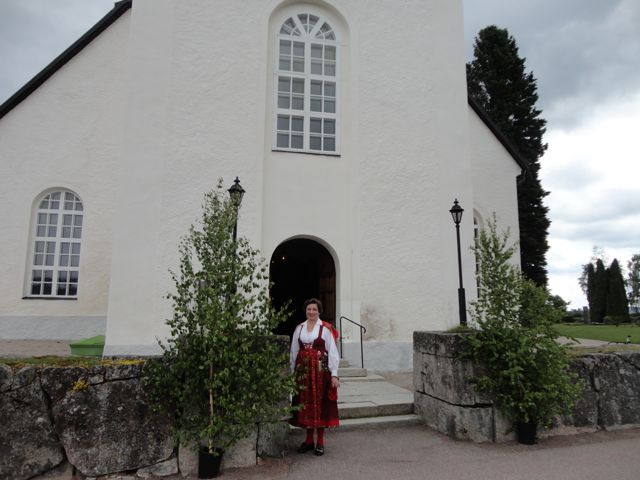
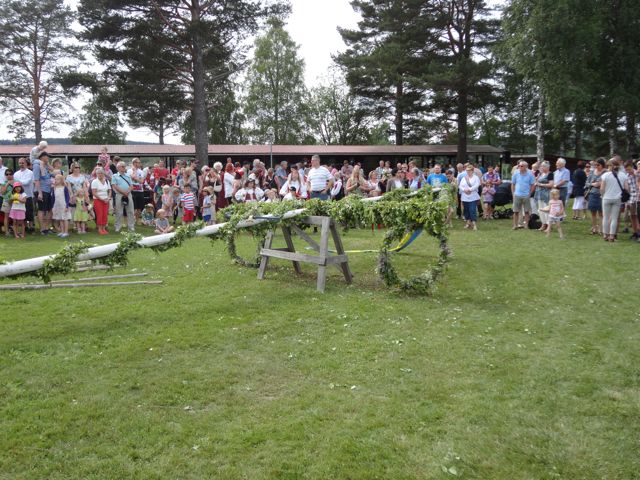
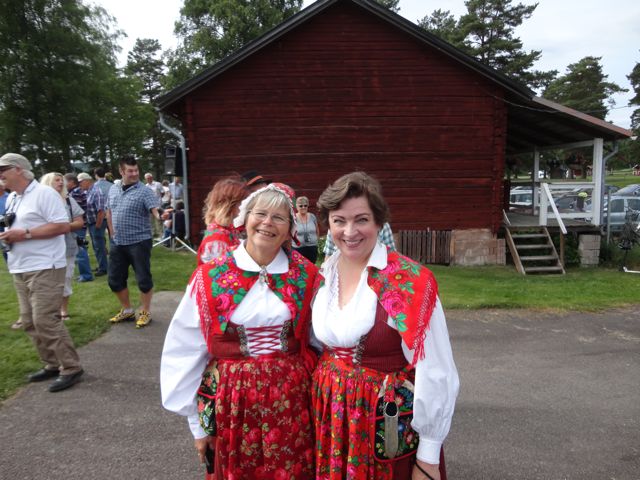
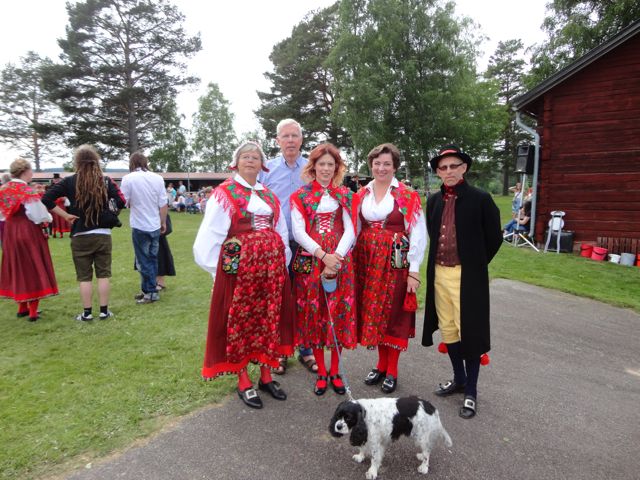
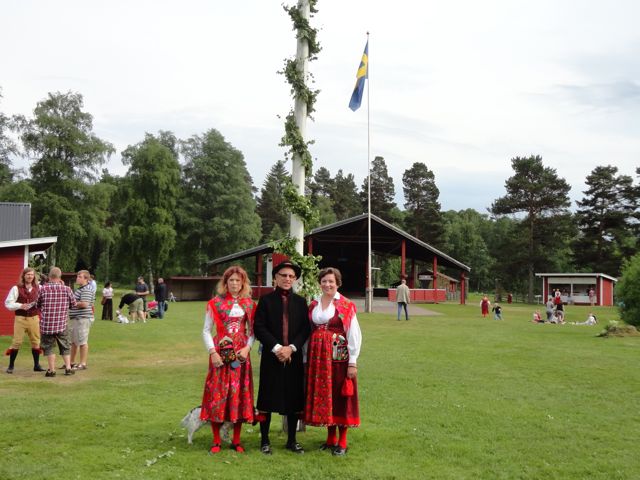
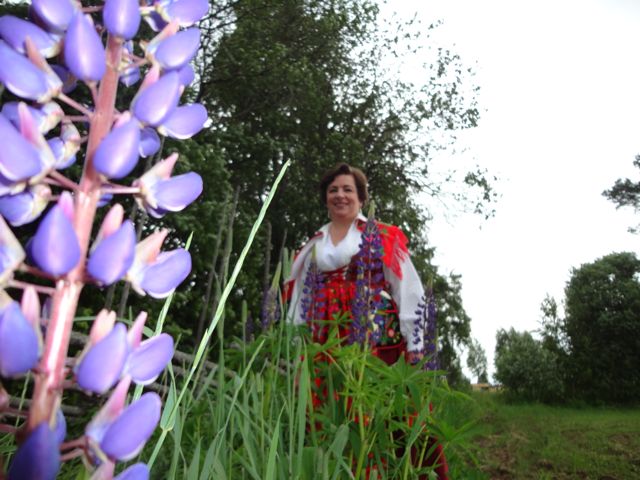
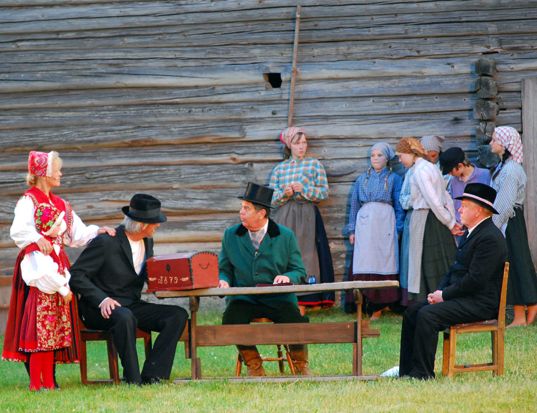
    I’m never happier than when I’m in Sweden for midsummer!  Midsummer is a holiday in Sweden, and everyone celebrates!  In 1983 my Swedish relatives had a parish dress made for me.  Every parish in Sweden has a different folk costume.  Mine is from the parish of  Nås, Dalarna, the village that Anna Lena came from, and the place we celebrated midsummer this year.

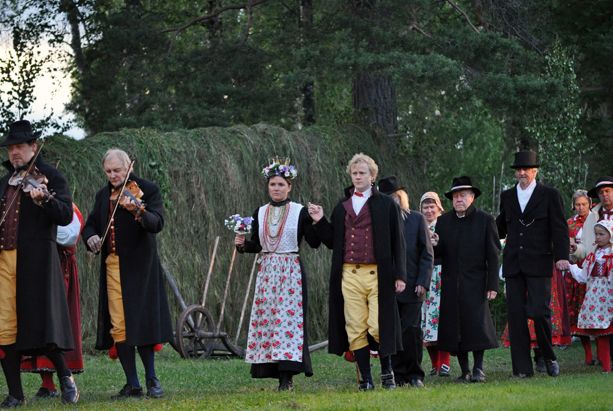
    Nås is on the banks of Västerdalälven, the West Dala River.  The musicians arrive by water.

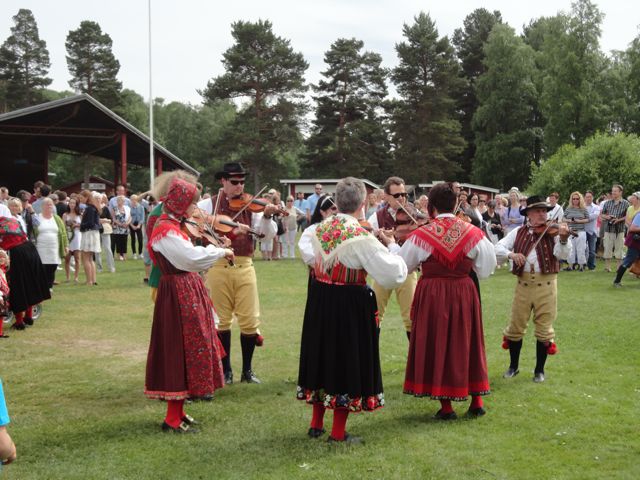
    The village celebration is held at Storänget, the local park.  The musicians lead the way to the maypole.

    The maypole has been prepared with greenery.  Usually there are flowers, too, but not this year.

    The MCs ask for volunteers to help raise the pole.

    It’s a big job, but there were lots of volunteers.

    Up, up, up it goes!

    Almost there….

    Finally!  It’s in place.

    It will stay up until next year.

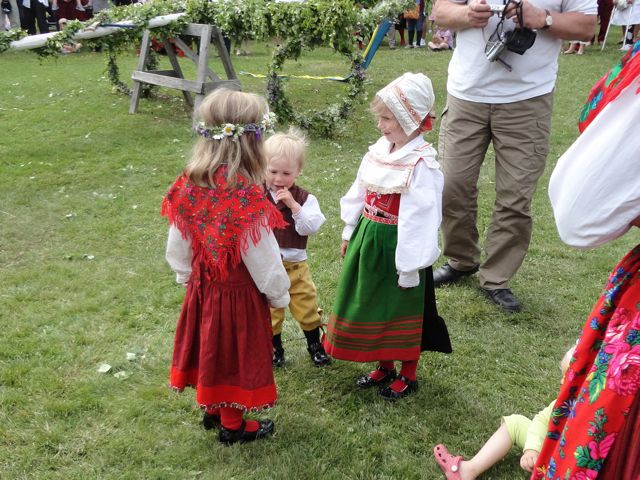
    Many of the children had made crowns from wildflowers.

    Did you know that if you pick seven different wildflowers on midsummer eve, and put them under your pillow, you will dream about your true love?

    It’s so nice to see youngsters dressed in the local style.

    I don’t think these are the traditional shoes!

    I’m not sure what parish this costume is from.

    How adorable!

    There is a competition among the neighborhoods which includes sack races, water bucket races…

    …races on stilts….

    …and wooden skis.

    Many of my relatives were there.  This is Torsten, on the left, and Sven-Eric.

    Torsten’s daughter, Emmi, and Sven-Eric’s wife, Anna.

    Bob and me with Ulrica and Carl.

    And with Berit and Gunnar.

    This is Ida.

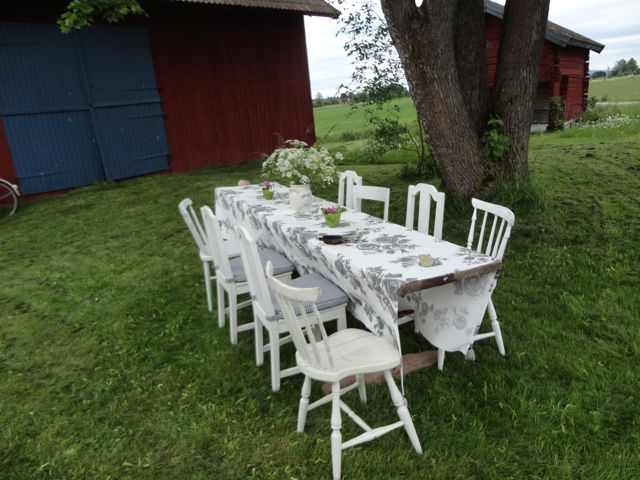
    From the park, we went to Sven-Eric and Anna’s for an alfresco meal.

    This table is made from one plank!

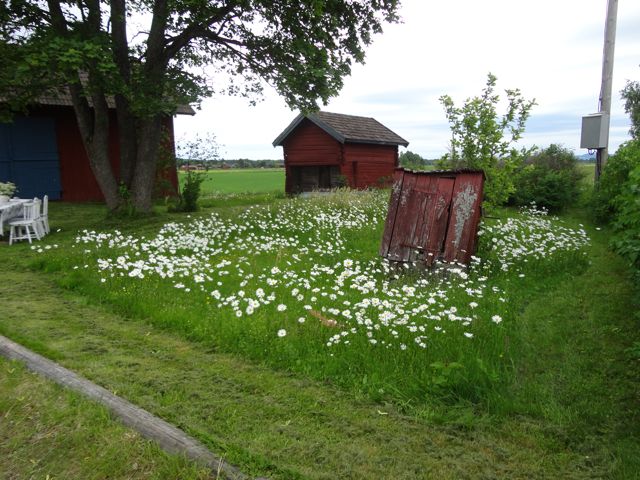
    Sticking with tradition, the barn was decorated with birch.

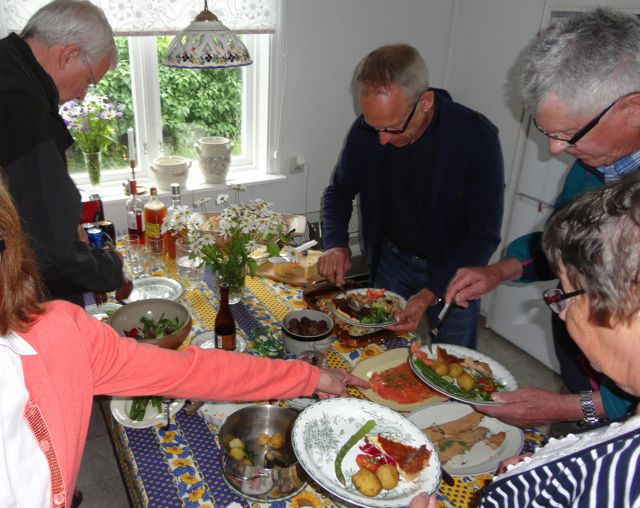
    There was plenty of wonderful food.

    And wildflowers, of course!

    Meatballs, potatoes and Vesterbotten pie.

    Gunnar won this giant box of candy!

    Which he shared with the rest of us.

    It was an absolutely magical day!
     

    Tags:
  • 18Jul

    Our first night on Gotland, we had a great waiter (and great dinner) at Bolaget.  I asked him, if he had one day to spend on the island, what would he do.  He suggested we go to Fårö at the northern end of the island.  It’s separated from the main island by Fårö Sound.  A quick ferry boat ride got us across the sound.

    The fabulous thing about being on an island is that your surrounded by water and beautiful vistas, like this lighthouse.

    Gotland is famous for it’s own breed of sheep–the Gotland sheep.  It has a long, curly coat.  I think this one recently had a haircut, except for his neck!

    There are black ones, too.  He has his coat on, but his neck has been shaved.  Go figure!

    These thatched roof barns were everywhere on Fårö.

    I was intrigued by the symbols on the top.

    I was told that it indicated the thatching job was finished, and everyone should come for a big meal!

    That thatch lasts about 50 years!

    As you can see, there were stone fences everywhere!

    Dry stacking amazes me!

    I thought this fence was both functional and artistic.

    I love the way the flat stones separate the round ones!

    There were several windmills here, too.

    By now, you probably all know my love for tiny buildings.

    These are fishermen’s cottages.

    Their boats were tied up out front.

    One of the most amazing features of the island were the limestone “sculptures.”

    The one in the back is mentioned in all the guidebooks.

    It’s called the “coffee pot.”

    But it really looks like a dog to me!

    Here’s a handsome fella!

    Oh, look!  I really was there!

    Tags:
  • 17Jul

    From Sweden’s second largest island, Öland, we went to Sweden’s largest island, Gotland!

    That meant a three and a half hour ferry boat ride.

    The main city in Gotland in Visby, an ancient walled city.

    Once we figured out how to get into the city, we were fine.  However, we didn’t know that cars weren’t allowed inside the city!
    It’s not that fun dragging bags over cobblestones, but it CAN be done!  And once we found our room, it was nice to be able to walk the cobbled streets without worrying about traffic.
    Some of the streets were rather steep, but the views were amazing.

    Buildings were a combination of wooden structures…

    …and those that had been stuccoed.

    But one of the most amazing features of the city was the ruins of St. Karin’s Church, which towered over everything else.

    Gotland is famous for its sheep.  If you don’t want cars on your street, you could just put up a concrete barrier, but a stone sheep is so much cuter!  These were everywhere!
    After a late dinner on our first night, we were walking back to our hotel just as the sun was setting.  I’m just a point-and-shoot photographer, so I was delighted to get this photo!

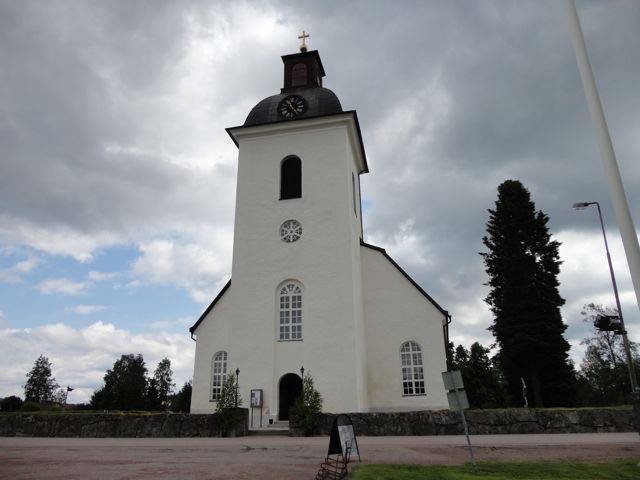
    Our second day on Gotland found us outside the city walls, exploring the countryside.  We stopped at the church in Bro.  There was a great sign that gave the following information, “The first church was built on this site in about 1200.  Only the tower remains of this structure together with a large number of building stones, incorporated into the present nave.

    “The high Gothic doorway of the nave has interesting figure sculptures.

    “Several 5th century picture stones are incorporated in the south wall.


    “In the interior there are medieval and 18th century mural paintings.


    “The Romanesque font is from about 1200.”

    I thought the door and lock were pretty cool, too.

    We stopped at a pretty little lake.

    There was a cottage there about the same size as the Swedish cottage in our woods.  I’ve been telling Bob I’d love to have a sunporch on our house.  He isn’t convinced we need one (who said anything about “need?”).  Perhaps we should put a sunporch on the cottage instead!

    This cottage even had a deck!

    There were wildflower everywhere!

    The color of these poppies was so intense!

    And these pink flowers were like a groundcover.

    Imagine my excitement when we discovered Bunge, open air museum!

    It was on the north end of the island.

    It showcased farmsteads from the 17th, 18th, and 19th centuries.

    There was a variety of architectural styles…

    …including some half-timbered houses.

    Here’s a charming little building.

    And another.

    I loved this window detail.

    This is a barn with a shaggy thatched roof.

    A typical fence from the area.

    I’m always fascinated to see how people eeked out a living.

    Here’s a mill.

    People were so clever–using a hollow log for a bee hive…

    …or a birdhouse!

    There were several kinds of windmills.

    An early “A” frame!

    This one had really thick walls and was 16 sided!

    Bob liked looking at the mechanics of things!

    I watched a great demo on how flax was processed into linen.

    Extremely interesting were some Stora Hammars Stones from the Viking Age!  They depict battles, sacrifices, etc.

    It was a great outing!


    Tags: