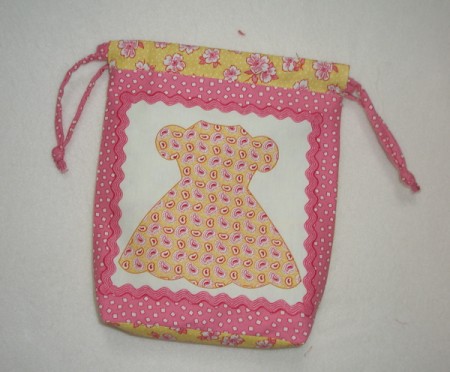
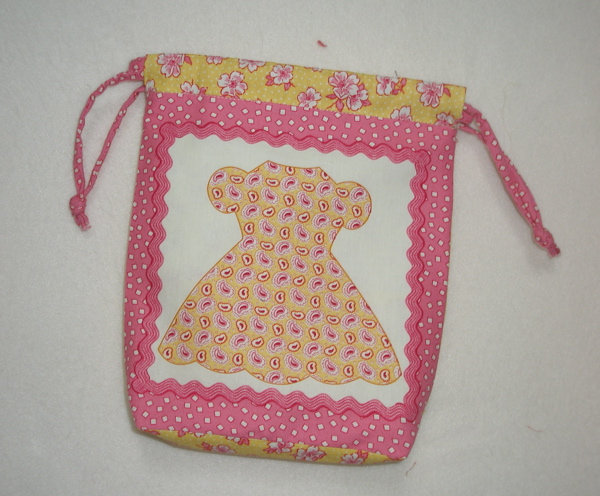
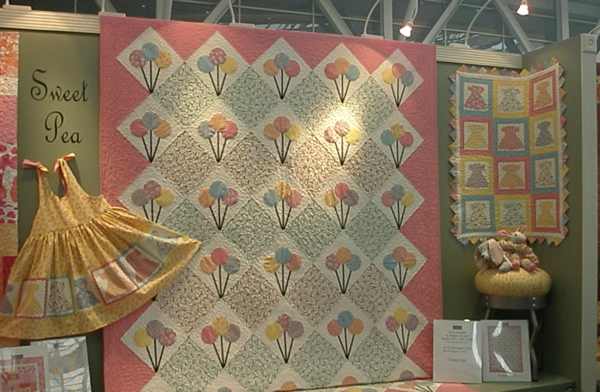
Perfect for your favorite Sweet Pea!
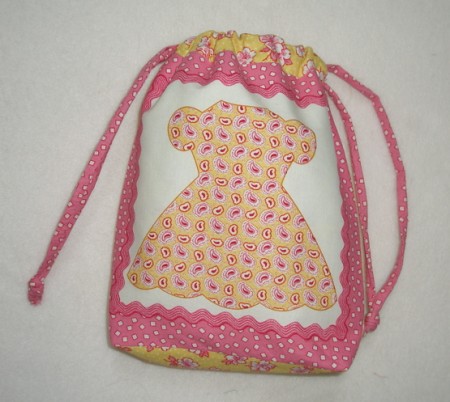
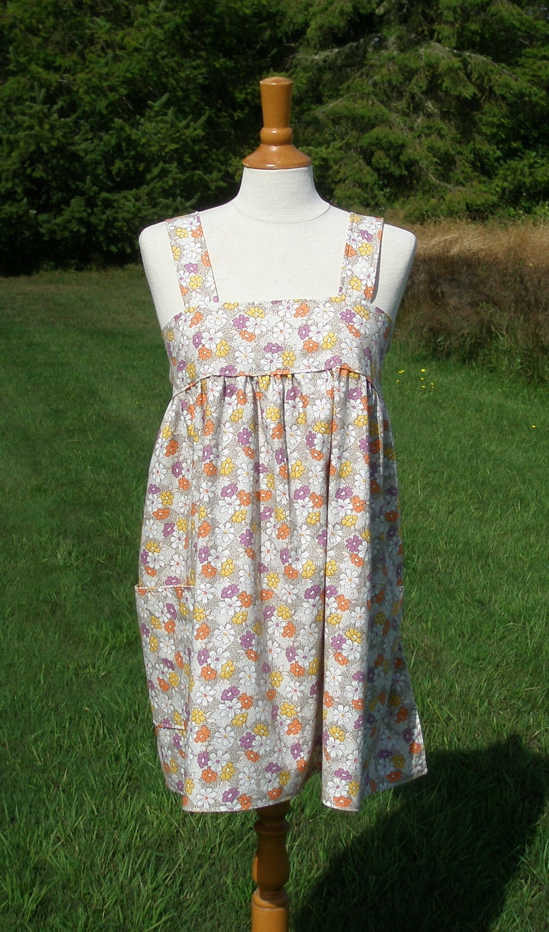
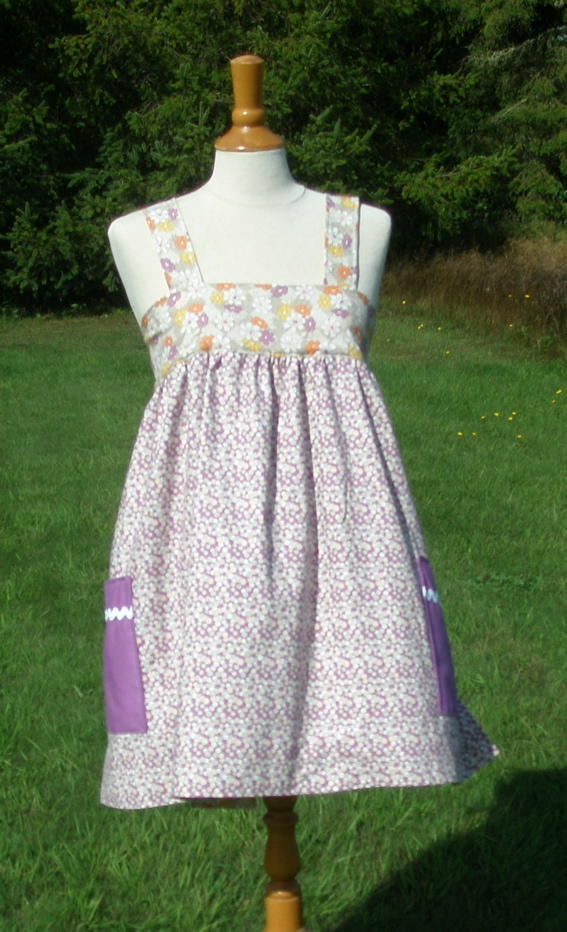
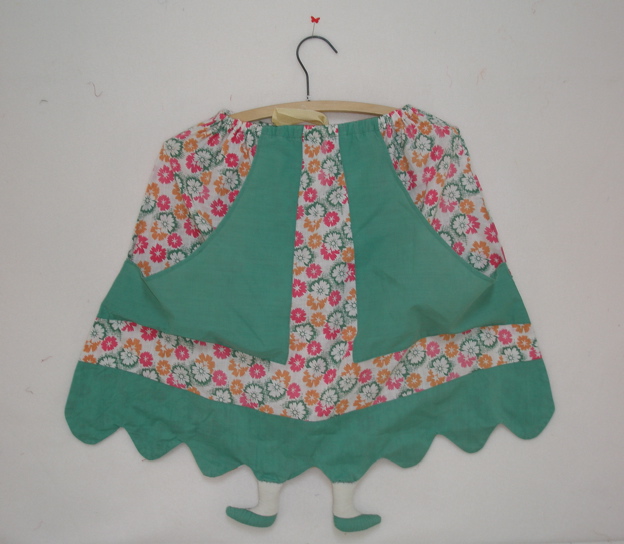
Isn’t this little bag just adorable? My friend Robin, who stitched up the Sweet Pea Jumper for me, thought any little girl who had such a cute jumper would want a little purse, too, so she just whipped this up! Amazing, huh? And she took lots of photos during the process so I could post this tutorial. If you’d like to make it, here’s how she did it.
Purse Tutorial
Fabric Requirements
2) 8″ squares of Sweet Pea Doll Panel
8″ x 21″ lining fabric
2″ x 8″ bottom fabric
2) 1″ x 24″ strips for drawstrings
Instructions
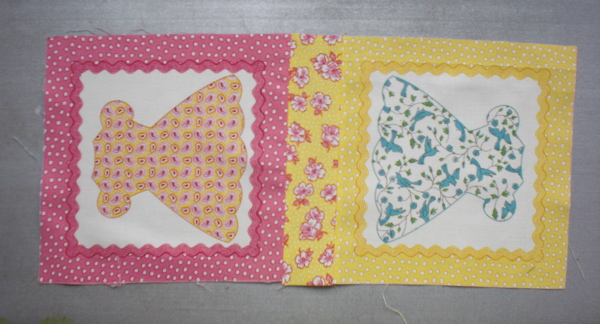
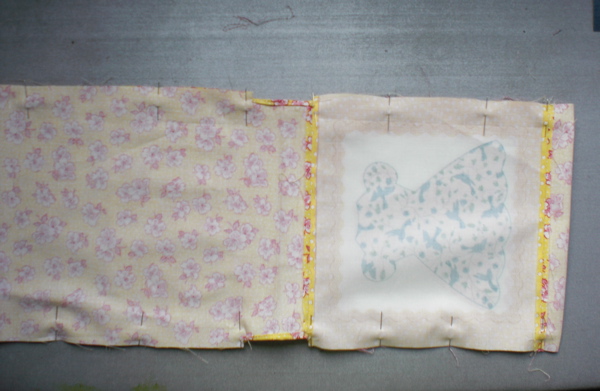
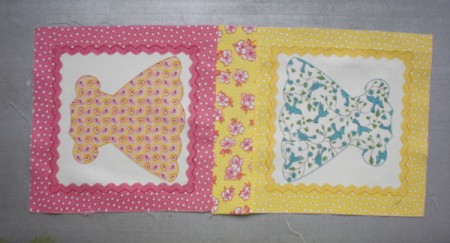
Insert the 2″ x 8″ piece between the 8″ dress panels. The bottom of each dress should be facing the inserted piece. Press seams open.
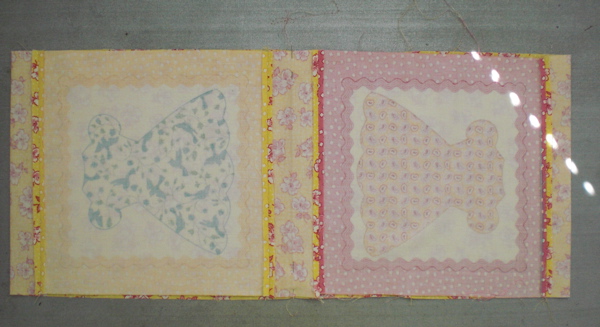
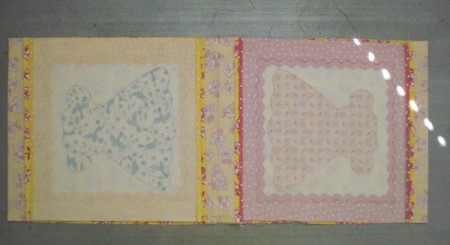
Place this piece right sides together with the lining, matching one end. Stitch. Press seam open. Now match the other short ends. Stitch. Press seam open. The lining piece is longer than the panel piece. Find the center of the insert and the lining. Pin together. Press outer edges.
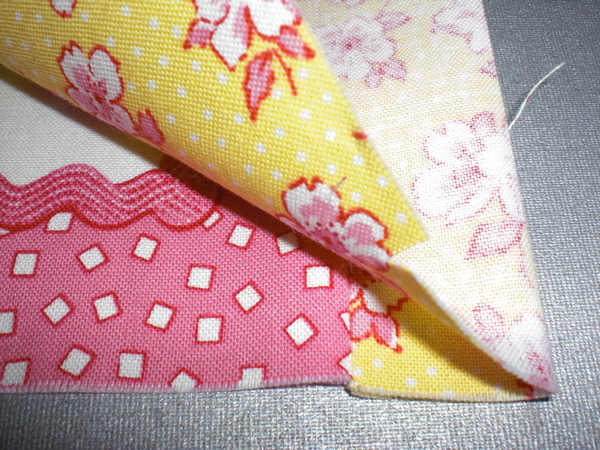
Make a 1/4″ clip at the seam line of the lining where it lines up with the insert. Repeat on both sides.
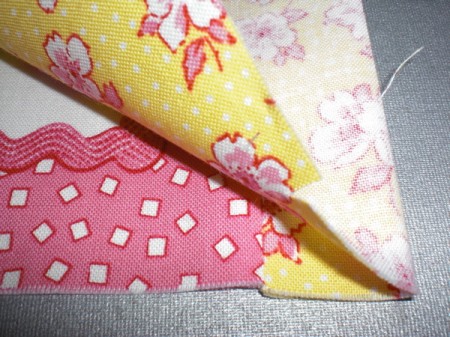
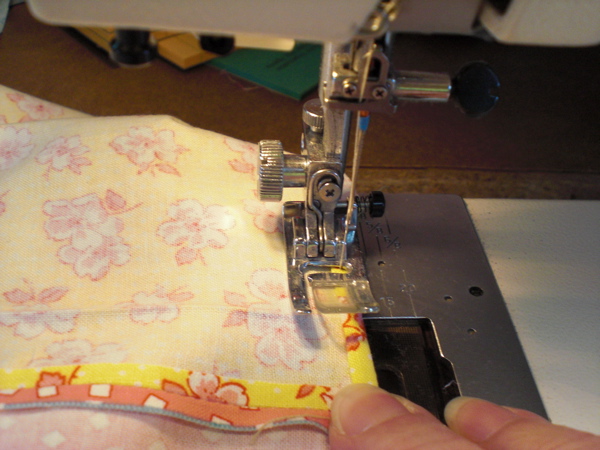
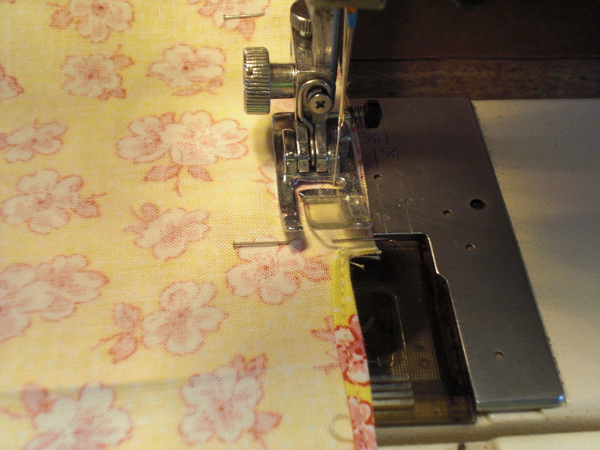
Turn under area from clip to make a narrow hem from clip to seam. Stitch.
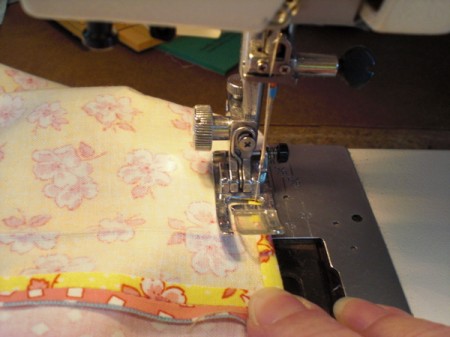
Pin the side seams.
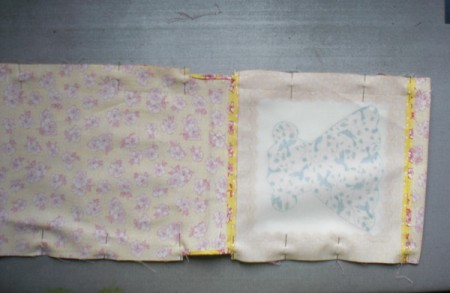
Sew up sides of lining and panels, leaving hemmed area unsewn.
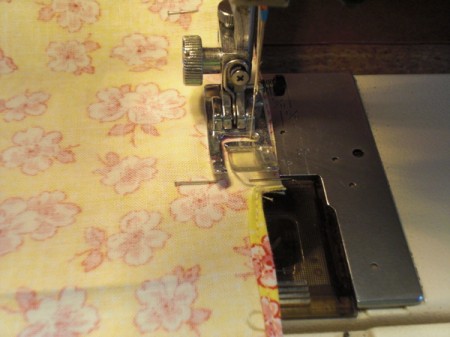
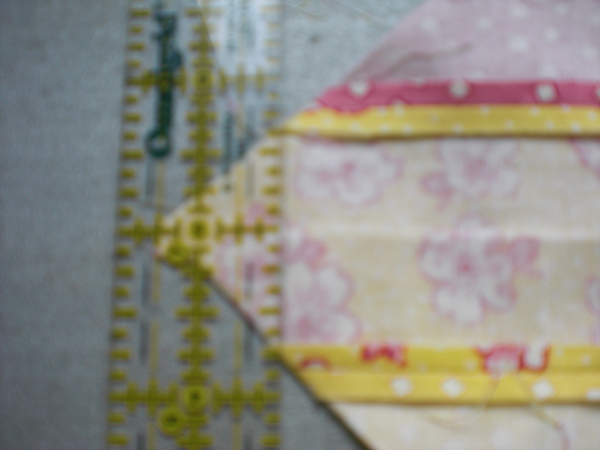
Mark a diagonal line 1″ in from each corner.
Stitch across market line to form a gusset.
Turn right sides out through hemmed opening. Top stitch both sides where the lining meets the panel.
Make drawstrings by folding long sides of 1″ x 24″ strips toward center. Press. Fold in half and topstitch.
Insert one drawstring left side, bringing it all the way around. Knot ends together. Insert the second drawstring into the right side, bringing it all the way around. Knot ends together. Fill with special treasures for your special little friend!